

By the Department of Mine Action, Lviv State University of Life Safety
Prepared for the EU Civil Protection Mechanism (UCPM) Consortium CROSSFLOOD Project
Context and Experience
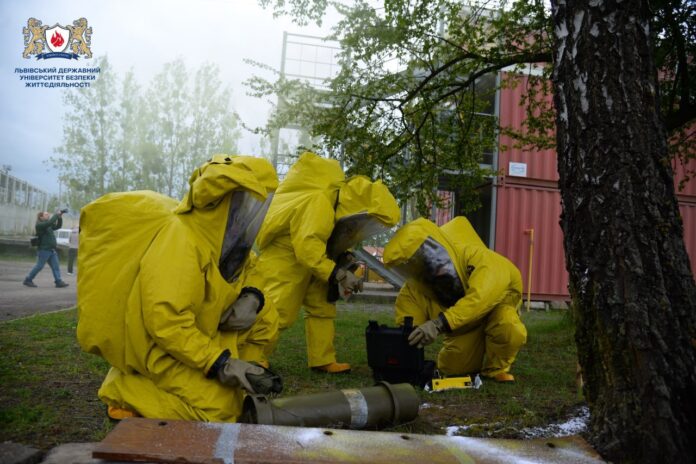
Background: The Department of Mine Action of Lviv State University of Life Safety is a specialised training and practical unit that provides a full cycle of training for specialists in the field of mine action and explosive ordnance disposal (EOD). The educational process combines theoretical instruction, practical classes using modern methods, field training, and the practical destruction of explosive ordnance at a dedicated training ground, in accordance with national requirements and the International Mine Action Standards (IMAS).
A distinctive feature of the Department is its personnel potential, formed of highly qualified specialists who combine many years of practical experience with teaching activity. The Department’s staff includes former military servicemen, commanders and specialists of pyrotechnic units of the State Emergency Service of Ukraine, as well as experts who have been directly involved in humanitarian demining operations, clearance of territories from explosive ordnance, and response to the consequences of armed aggression. A significant proportion of personnel are combat veterans with many years of experience conducting operations in areas contaminated with mines, unexploded ordnance, and other explosive remnants of war.
All instructors of the Department hold national qualifications in the field of mine action and the international qualification of EOD Level 3 (EOD3), confirming their capability to perform complex technical work on the disposal of explosive ordnance, to organise and conduct personnel training in accordance with international standards, and to pass on practical experience gained under the conditions of modern warfare.
The combination of a modern, technical and material base, an internationally certified teaching staff, and unique practical experience gained while responding to explosive threats in Ukraine makes the Department of Mine Action of LSULS one of the country’s leading training and practical centres for the preparation of humanitarian demining specialists.
Functional Capabilities
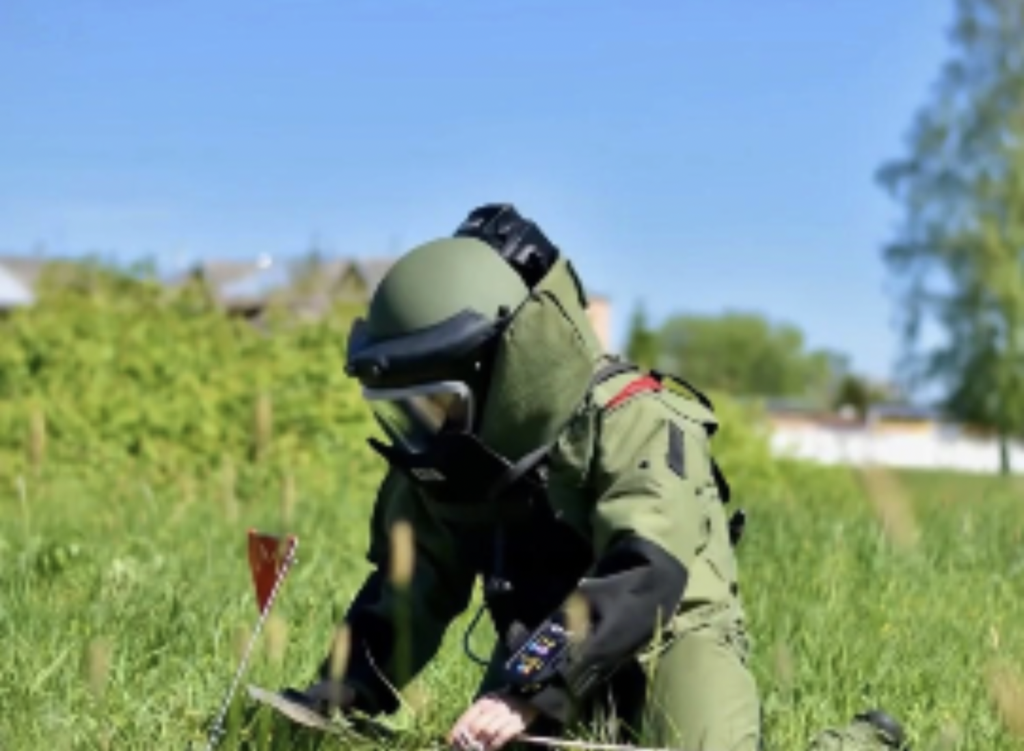
The Department of Mine Action of LSULS trains specialists in conducting Technical Survey and Non-Technical Survey of territories in accordance with the national standards of Ukraine (DSTU), the standard operating procedures (SOPs) of the State Emergency Service of Ukraine (DSNS), and the International Mine Action Standards (IMAS), on the basis of which they were developed. This approach ensures compatibility with international practice and enables Ukrainian experience to be integrated into joint operations.
The Department’s personnel have practical experience in conducting non-technical and technical surveys of territories contaminated with explosive ordnance, including areas affected by hostilities. This experience enables the effective search, localisation, and identification of mines, unexploded ordnance, and explosive remnants of war, including those that may have been displaced by flood waters, carried by currents, or concealed beneath layers of silt and soil.
Within the framework of the CROSSFLOOD exercise, these capabilities can be used for the rapid assessment of mine hazards in coastal areas, the identification of safe routes for international teams, and the provision of safe access to areas where emergency response and humanitarian operations are being conducted.
Risk Assessment and Marking
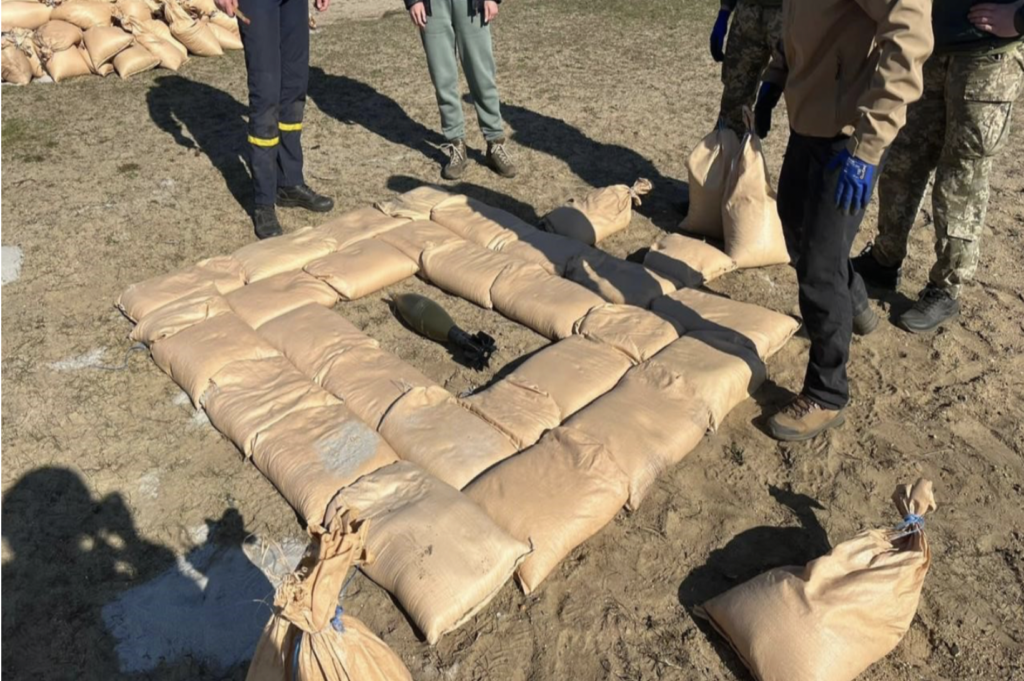
Once explosive ordnance has been detected, specialists of the Department of Mine Action assess the level of hazard, determine the boundaries of hazardous areas, and mark them in accordance with the standard operating procedures of the State Emergency Service of Ukraine (SOP), national standards (DSTU), and the International Mine Action Standards (IMAS).
To ensure the accuracy of spatial referencing, GNSS/GPS receivers are used, enabling the determination of the coordinates of detected explosive ordnance, hazardous zones, and installed warning signs. The field data collected is documented and can be integrated into geographic information systems and the Information Management System for Mine Action (IMSMA), ensuring the creation of up-to-date mine hazard maps, the application of standard symbols, and the formation of a unified operational picture.
Safe Access Provision
The Department of Mine Action of LSULS has the capability to ensure safe access to areas where emergency response operations are conducted by surveying and clearing logistics routes, approaches to water bodies, deployment sites for Bases of Operations (BoO), medical points, and other critical areas of explosive ordnance.
Operations are carried out using personal body armour, modern metal detectors, non-mechanised and remotely operated robotic systems, and specialised equipment for the safe disposal of explosive ordnance. Depending on the type of ordnance and the operational situation, the methods applied may include: Low Order Techniques, which achieve deflagration of the explosive substance or minimise the risk of detonation; “Hook and Line” remote manipulation systems; “Dearmor” equipment for the safe removal or destruction of fuzes; and reaction wrenches for removing fuzes from large-calibre artillery ordnance and aerial bombs. Where an item of explosive ordnance is assessed as suitable for transport, it is evacuated by a specialised light pyrotechnic vehicle to a designated location for further disposal.
Use of Advanced Technologies
LSULS has a unique capability to integrate the capacities of the Department of Mine Action and the Department of Unmanned Systems and Robotics for joint tasks in remote reconnaissance of territories. The teaching staff of the Department of Unmanned Systems and Robotics consists of practising specialists who hold external UAV pilot certificates and have considerable experience in the operational use of UAVs during special tasks.
During territory surveys, work is organised on the principle of interaction between the UAV crew and the sapper team. Prior to the commencement of ground survey UAV operators conduct remote aerial reconnaissance of the terrain, analyse the condition of the area, identify potentially hazardous sections and possible locations of explosive ordnance, and assess the consequences of flooding, including soil displacement, coastline erosion, and areas of possible accumulation of explosive ordnance.
The aerial imagery and coordinates of potentially hazardous objects obtained are passed to the sapper teams for planning safe movement routes, determining priority survey zones, and minimising risks to personnel. This approach significantly increases the effectiveness of technical surveys, reduces the time required to complete the work, and ensures maximum personnel safety.
Standards
The training of specialists and the practical activity of the Department of Mine Action of LSULS are carried out in accordance with the national regulatory frameworks of Ukraine, in particular the state standards (DSTU) and the standard operating procedures of the State Emergency Service of Ukraine (SOP), which have been developed on the basis of the requirements and recommendations of the International Mine Action Standards (IMAS). This approach ensures the compatibility of Ukrainian procedures with international practice and promotes effective cooperation with foreign partners during joint operations and exercises.
Since 2017, Ukraine has been implementing a systematic introduction of international approaches to the organisation of mine action, which is reflected in national standards, planning procedures, operational execution, risk management, quality assurance, and personnel training. This is why most of the practical methods applied by Ukrainian pyrotechnic units comply with the principles and recommendations of IMAS.
The Department’s academic and teaching staff hold the international qualification of EOD Level 3, confirming their capability to perform the full range of explosive ordnance disposal work in accordance with international requirements. The Head of the Department holds the qualification EOD Level 3+, which additionally covers the disposal of aerial bombs, guided munitions, and other complex categories of explosive ordnance.
CROSSFLOOD – Field Exercise Tasks
- Acting as the first team to verify the safety of the coastline before flood-response modules begin deploying equipment.
- Rapid response to explosive threats identified within the exercise area.
- Integration of Ukrainian mine-action expertise into the joint procedures of the EU Civil Protection Mechanism (UCPM).