

Jakarta, Indonesia | 20–21 October 2026
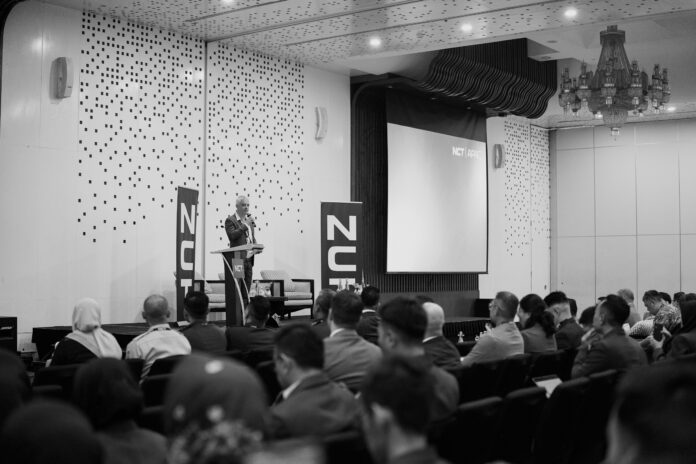
NCT APAC 2026 brought together CBRNE professionals, government representatives, scientists, law enforcement personnel, military specialists and emergency response experts at Le Méridien Jakarta on 20–21 October. Across two days of presentations and professional exchange, the event examined how countries can strengthen their preparedness for chemical, biological, radiological, nuclear and explosive threats through practical experience, scientific capability and closer coordination between agencies.
The programme addressed the operational challenges that emerge before, during and after a CBRNE incident. From recognizing early warning signs and managing contaminated casualties to protecting critical infrastructure and conducting nuclear forensics, the sessions explored how individual capabilities can be connected into a coordinated response.
Preparing for an Increasingly Complex Threat Environment
The opening plenary established the context for the discussions ahead, bringing participants together around the shared challenge of improving CBRNE preparedness in a complex and evolving security environment.
The programme emphasized that effective readiness depends on more than specialist equipment. Personnel must be trained to recognize threats, procedures must be understood across organizations, and information must reach the people responsible for making decisions. These requirements become particularly important when an incident crosses institutional boundaries or demands simultaneous action from security, health, scientific and emergency response services.
Throughout the event, this need for an integrated approach emerged as a recurring theme: no single organization holds all the capabilities required to manage a complex CBRNE incident from detection through investigation and recovery.
Clinical Response and Mass Casualty Management
The first technical session, “Clinical Response and Mass Casualty Management in CBRNE Events: Lessons from the Field,” examined the challenges faced by health systems and first responders when hazardous materials may still be present while casualties require urgent care.
Contributions came from Dr. Nurhazlina Hamzah of Kimia Malaysia; Dr. Makoto Akashi, Professor at Tokyo Healthcare University; Laura Cochrane, Vice President and Head of Mass Casualty Management Medical Affairs at SERB Pharmaceuticals; Lt. Col. Jennifer Y. Mateo of the Armed Forces of the Philippines; and Dr. Surmarjaya of Indonesia’s Ministry of Health. The wider discussion also included the field perspective of Dr. drh. Susan Maphilindawati Noor of Indonesia’s National Research and Innovation Agency (BRIN).
A central challenge discussed was the difference between a conventional mass casualty incident and a CBRNE event. In the latter, the hazard may remain active when the first casualties arrive. Responders must therefore consider scene safety, operational zoning, triage, decontamination and hospital readiness alongside clinical treatment.
Dr. Noor used historical incidents to illustrate the consequences of gaps in preparedness. The 1995 Tokyo sarin attack demonstrated how patients arriving independently at a hospital can bring contamination into a clinical environment. Her presentation highlighted the importance of controlling patient entry, separating potentially contaminated casualties and protecting healthcare workers so that hospitals can continue operating.
The Indonesian experience also illustrated the value of connecting human and animal health surveillance. Examples involving avian influenza and anthrax showed how unusual animal illness or deaths can provide an early warning of risks to people. The message was clear: timely information sharing between veterinary services, laboratories, public health authorities and security agencies can help identify a developing incident before its full consequences become apparent.
The session reinforced that effective clinical response begins well before treatment. Clear command arrangements, appropriate protective measures, defined operational zones and coordinated hospital pathways are essential to protecting both casualties and the personnel responding to them.
The Human Factor: Intelligence, Surveillance and Early Warning
The session “The Human Factor: Intelligence, Surveillance and Early Warning in CBRNE Operations” turned attention to the information and decision-making processes that help authorities identify threats and coordinate an appropriate response.
Speakers included Col. (Ret.) Jaewoo Seong of the Korea Arms Control Verification Agency; Police Senior Commissioner Dr. Ikhwanuddin of Indonesia’s National Counter-Terrorism Agency (BNPT); Brig. Gen. Yopie Indra Prasetya Sepang of the Indonesian National Police; and Dr. Susan Maphilindawati Noor of BRIN.
The presentations examined the importance of understanding areas vulnerable to radicalization and terrorism, improving institutional cooperation and ensuring that relevant information can move between organizations. In Indonesia’s counter-terrorism context, the discussion addressed interoperability between institutions, cooperation across jurisdictions and the development of capacity to manage complex incidents.
Early warning is only useful when information can be interpreted and acted upon. Technology may detect an anomaly, but trained personnel must assess its significance, communicate the risk and determine what action is required. The session therefore placed people, procedures and institutional relationships at the centre of operational readiness.
These discussions also connected surveillance with preparedness: identifying a potential threat is only the first step. Authorities must have established channels for sharing information, defined responsibilities and response procedures that can be activated without unnecessary delay.
Countering Urban CBRNE Threats
Urban environments create particular challenges for CBRNE preparedness. Dense populations, interconnected infrastructure and the proximity of transport networks, public services and critical facilities can complicate both the consequences of an incident and the response.
The session “Countering Non-State Actors: Chemical, Biological and Explosive Threats in Urban Environments” featured Sr. Supt. Raymond Chin-Chiu Suryanto of the Hong Kong Police and Col. Allan M. Mangaser of the Armed Forces of the Philippines.
The discussion addressed the convergence of chemical, biological and explosive threats in urban settings, where an incident can affect multiple services and demand rapid coordination. Participants examined the importance of incident command, the protection of critical infrastructure, public trust and the ability of different organizations to work together under pressure.
The session also highlighted that preparedness requires more than a response plan on paper. Agencies need opportunities to develop shared procedures, understand one another’s capabilities and strengthen their ability to coordinate during an incident. These elements are particularly important when threats evolve quickly or affect several locations and services at once.
Protecting Critical Infrastructure Through Coordinated Preparedness
Critical infrastructure protection formed another important part of the programme, bringing attention to the consequences that CBRNE incidents can have beyond the immediate scene.
The session included contributions from Prof. Dr. Syaiful Bakhri of BRIN, Lim Poh Chuan of the Kent Ridge CBR Regional Centre in Singapore, Ibu Mas Ayu and Ir. Zainal Arifin.
The discussions considered the importance of preparedness across infrastructure and the organizations responsible for maintaining essential services. An incident affecting a critical facility can create wider operational and public safety consequences, making coordination between technical specialists, security personnel and emergency management authorities essential.
The broader programme connected infrastructure resilience with risk assessment, operational planning and the need to maintain response capabilities over time. Protecting essential services requires organizations to understand their vulnerabilities, establish clear responsibilities and prepare for situations in which several agencies may need to act simultaneously.
This perspective complemented the sessions on clinical response and early warning: effective CBRNE preparedness must connect threat recognition with decisions that protect people, facilities and the continuity of essential operations.
From Detection to Attribution: Strengthening Indonesia’s Nuclear and Radiological Response
On the second day, Dr. Maman Kartaman Ajiriyanto of BRIN presented “From Detection to Attribution: Strengthening Indonesia’s Nuclear and Radiological Response through Interoperability and Capacity Building.” His presentation examined how scientific analysis can support incident response and investigation following the detection of radioactive or nuclear material.
The presentation mapped Indonesia’s response ecosystem, including BRIN’s scientific analysis and nuclear forensics capabilities, BAPETEN’s regulatory and radiation safety responsibilities, the roles of the Indonesian National Armed Forces (TNI) and National Police (POLRI), relevant ministries and agencies, and international partners.
Dr. Ajiriyanto outlined the process from an initial radiation detection through sample collection, radiological characterization and nuclear forensic analysis to source attribution and subsequent law enforcement or national security decisions.
A key element was the role of a National Nuclear Forensics Library: a structured knowledge base that can help specialists compare the physical, chemical and isotopic characteristics of nuclear and radioactive materials. By combining these characteristics with information about a material’s history and provenance, investigators can build a more informed understanding of where a material may have originated and what an incident may indicate.
The presentation also explained the value of isotopic fingerprinting. Measuring radioactivity can help characterize the level of contamination, while elemental composition and isotopic signatures can provide additional information relevant to identifying a material and investigating its origin. No single measurement necessarily answers every question; combining complementary evidence strengthens the interpretation.
However, technical capability alone is not enough. Samples, analytical results and investigative information must be handled through compatible procedures and a reliable chain of custody. Laboratories, regulators, responders and law enforcement authorities need ways to coordinate their work and interpret findings within a shared framework.
Regional and international cooperation, including engagement with relevant nuclear forensics networks and partners, was presented as an important part of building sustainable national capability.
Interoperability and Capacity Building
The programme concluded its technical discussions with “Interoperability and Capacity Building: Joint Approaches to CBRNE Threats.” The session brought together Col. Johannie San Miguel of the US 8th Army; KBP Andy Rifay of Indonesia; Sqn. Ldr. Kamonrat Ruanma of the Royal Thai Air Force; Athula Daulagala, formerly of the Sri Lanka Police Special Task Force; and Dr. Maman Kartaman Ajiriyanto of BRIN.
The contributions reflected different national and institutional perspectives on the practical challenges of coordinated CBRNE response. These include differences in standard operating procedures, limited resources, incompatible equipment and communication systems, and difficulties sharing information at the strategic level.
The discussion also looked ahead to emerging challenges, including the implications of artificial intelligence and drone-related threats. As technology develops, organizations must consider interoperability from the beginning rather than treating compatibility as an issue to resolve after equipment has been acquired.
The session emphasized several connected foundations of interoperability: people, procedures, technology, information and cooperation. Personnel need a common understanding of their roles; procedures must support coordinated action; technical systems must be compatible where required; and information must be shared securely and interpreted consistently.
Capacity building sustains these connections. Training, exercises and the exchange of operational experience help organizations identify weaknesses, refine procedures and maintain readiness. The objective is not simply to strengthen individual agencies, but to ensure that their capabilities can be brought together when an incident requires a coordinated response.
Conference, Exhibition and Professional Networking
Alongside the technical programme, NCT APAC 2026 provided opportunities for participants to continue discussions during networking breaks, the exhibition and the networking reception. These exchanges complemented the formal sessions by bringing together professionals working across different disciplines and national response systems.
The exhibition provided a setting for participants to engage with the CBRNE sector and explore the technologies and capabilities represented at the event. The combination of presentations and professional interaction helped connect operational challenges with the people and organizations working to address them.
The event concluded with closing remarks from William King, Chairman and Senior Advisor at NCT Consultants, and Ilja Bonsen, President of NCT Consultants, followed by the NCT PRO training certificate ceremony.
NCT APAC 2026
Across two days in Jakarta, NCT APAC 2026 explored CBRNE preparedness from multiple perspectives: clinical response, intelligence and early warning, urban threats, critical infrastructure, nuclear forensics and interagency interoperability.
The presentations demonstrated how these areas are connected. Early warning must lead to informed decisions; clinical response depends on protecting both casualties and responders; forensic analysis requires reliable scientific methods and coordinated investigation; and national capabilities become more effective when organizations can work together.
The event provided a forum for professionals from across the region and beyond to exchange experience, examine operational challenges and discuss approaches to strengthening preparedness. Its central message was consistent throughout the programme: effective CBRNE readiness depends not on any single technology or institution, but on the ability to connect people, procedures, information and technical capabilities into a coordinated response.
By bringing these perspectives together, NCT APAC 2026 reinforced the importance of continued training, professional exchange and cooperation in building more resilient CBRNE response capabilities.