

By KNDS CBRN
The CBRN threat landscape has fundamentally transformed, driven by rapid
technological advancements, geopolitical shifts, and the proliferation of dual-use
capabilities. No longer limited to state arsenals or industrial accidents, today’s threats
emerge from bioengineered pathogens, weaponized drones, and 3D-printed dispersal
devices, all of which have lowered the barrier for non-state actors to execute
sophisticated attacks. This new reality demands more than vigilance, it requires a
complete rethinking of how protection, decontamination, and reconnaissance are
integrated into a cohesive defense strategy.
The modern CBRN environment is defined by its unpredictability and diversity,
rendering traditional defense strategies inadequate. With synthetic biology, AI-driven
systems, and accessible advanced materials reshaping the threat matrix, the need
for adaptive, rapid-response solutions has never been more critical. The challenge is
clear: anticipate the unpredictable, neutralize emerging threats, and ensure
operational continuity in an era where danger can come from any direction.
Redefining CBRN Protection
A complete CBRN breathing equipment system must do more than simply protect from
toxic agents, it must integrate seamlessly with the soldier’s mission, environment, and
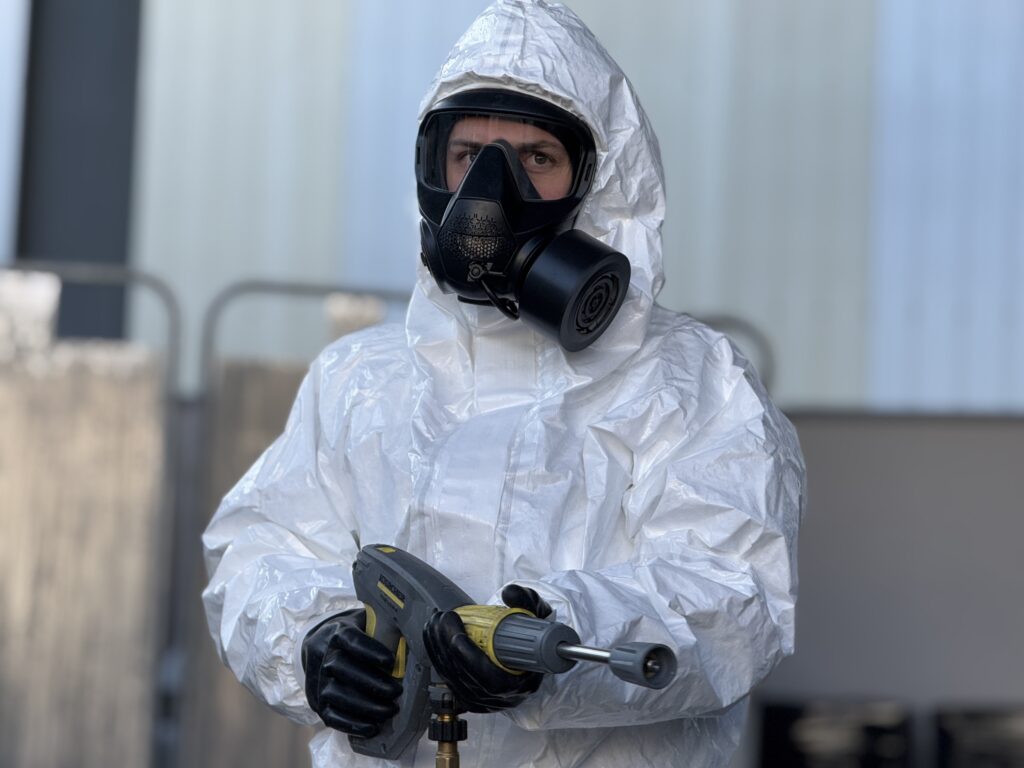
operational requirements. The TGM48 from KNDS CBRN represents this holistic
approach, addressing the core elements that define effective CBRN
defense: protection, vision, communication, extended wear, and military-specific
adaptability.
At its core, the TGM48 delivers uncompromising protection against the full spectrum
of CBRN threats. Its advanced materials and sealed interfaces prevent even the
smallest particles from penetrating, while its robust construction ensures resistance to
mechanical stress, whether from abrasions, impacts, or extreme environmental
conditions. Designed to perform in everything from desert heat to Arctic cold, the
TGM48 maintains consistent protection regardless of the operational context.
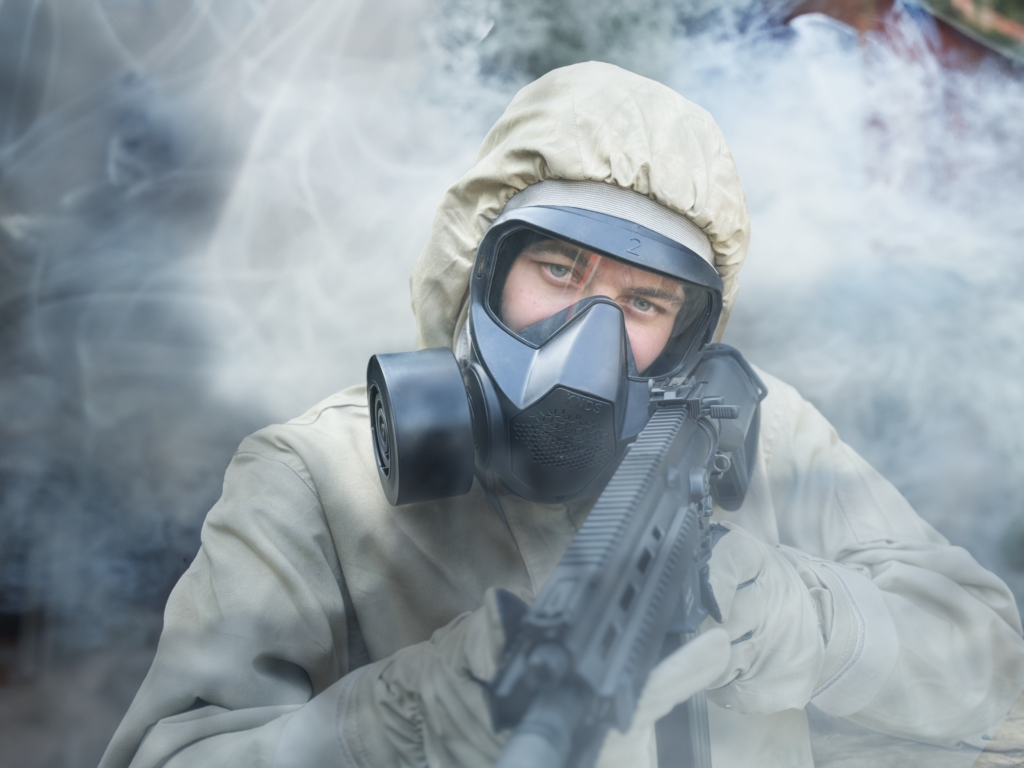
Vision is a critical factor in CBRN environments, where clarity can mean the difference
between mission success and failure. The TGM48’s panoramic visor eliminates optical
distortion, providing the widest field of view available on the market. Treated with anti-
fog and anti-scratch coatings, it ensures uninterrupted situational awareness, even in
the most hostile conditions. Extensive optical simulations and real-world testing have
refined this visor.
Communication is another cornerstone of the TGM48’s design. A gas mask that
impairs speech can compromise an entire operation, so the TGM48 incorporates
a high-performance speech diaphragm that ensures clear voice transmission, even in
high-noise environments. Compatible with radio microphones and vehicle intercom
systems, it integrates seamlessly into existing communication networks, enabling
soldiers to relay information, receive orders, and coordinate actions without removing
their masks, even in the most chaotic scenarios.
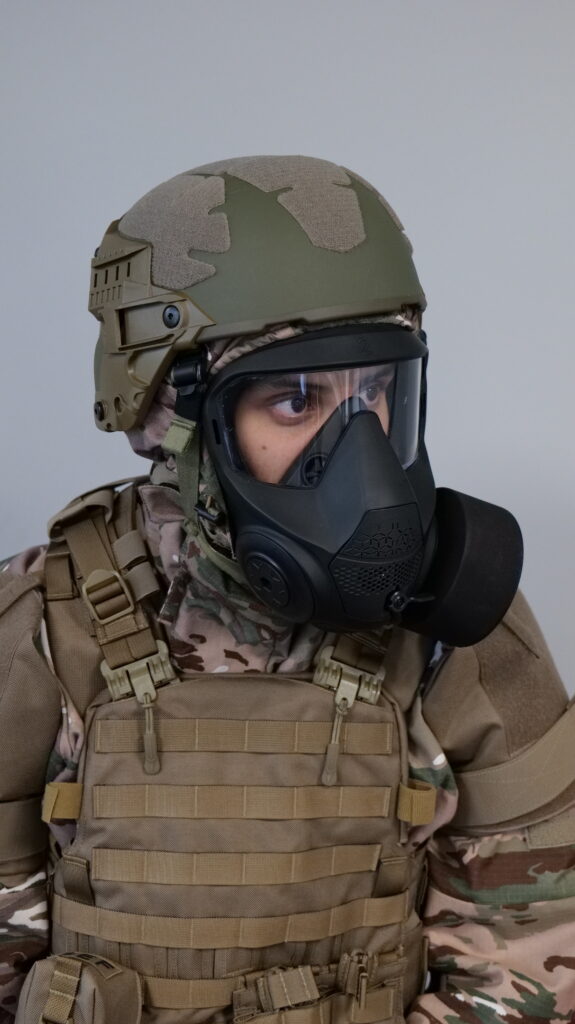
For extended wear, the TGM48 is engineered to minimize fatigue and maximize
endurance. Its adjustable harness system distributes pressure evenly, eliminating
cranial compression, while sweat evacuation channels and lightweight
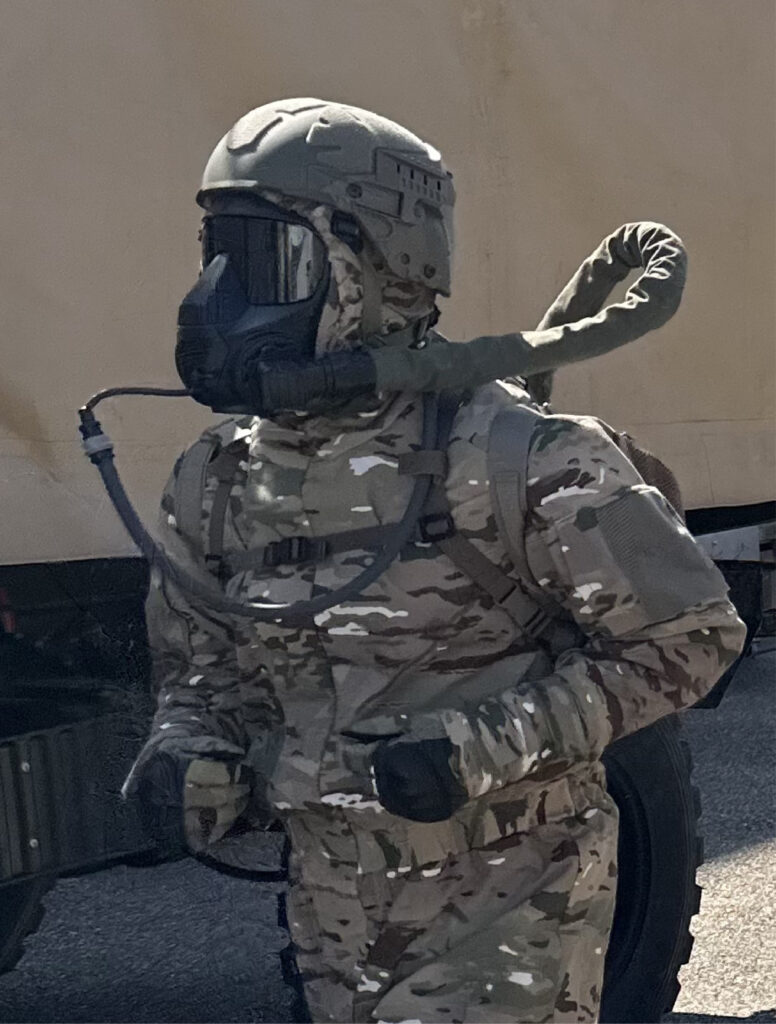
materials enhance comfort during prolonged missions. The TGM48 also integrates a
hydration system, allowing operators to drink safely without breaking the seal. With
a five-size range, it ensures a perfect fit for 98% of military personnel, accommodating
diverse facial structures without compromising protection. This inclusivity isn’t just
about comfort, it’s a necessity to ensure all soldiers perform at their best, regardless of
physical differences.
The TGM48 is a military-specific system, designed to meet the unique demands of
modern warfare. Every detail such as its modular accessory options, reflects an
understanding of real-world operational challenges. Whether mounting optical inserts,
integrating communication devices, or attaching sun visors, the TGM48 adapts to the
soldier. Its compatibility with helmets, night vision devices, and breathing apparatus
ensures seamless integration into any loadout.
Finally, the TGM48 is built to withstand environmental stressors, from salt fog and sand
to extreme temperatures. Rigorous testing guarantees that it remains fully functional
in the harshest conditions, delivering reliable protection no matter where the mission
takes place. This combination of features makes the TGM48 not just a piece of
equipment, but a force multiplier, enabling soldiers to operate with confidence in even
the most hazardous environments.
The Critical Role of Decontamination in Modern CBRN operations
In the realm of CBRN defense, decontamination is not just a secondary measure, it is
a decisive factor in determining whether an incident remains contained or escalates
into a full-blown crisis. Traditional decontamination systems, often slow and
cumbersome, struggle to keep pace with the dynamic and unpredictable nature of
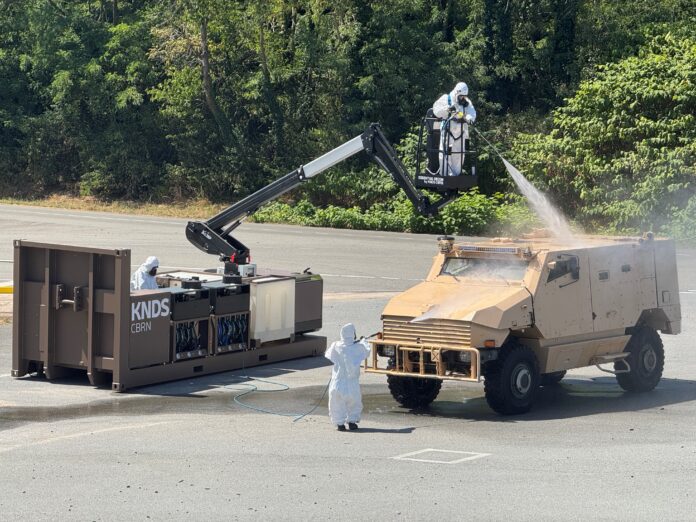
modern CBRN threats. The ESSENTIAL DECON L-01 heavy decontamination
system redefines this critical capability, offering a mobile, versatile, and highly effective
solution that meets the demands of today’s operational challenges.
The ESSENTIAL DECON L-01 is engineered for rapid deployment, designed to be
mounted on a truck or deployed on the ground, making it adaptable to a wide range of
scenarios, from battlefield conditions to urban response missions. Its six-lance
configuration enables simultaneous decontamination of vehicles, infrastructure, or
equipment, drastically reducing the time required to neutralize threats and restore
operational readiness. This capability is not just about speed; it’s about ensuring that
contamination is contained before it can spread, minimizing downtime and preserving
mission continuity.
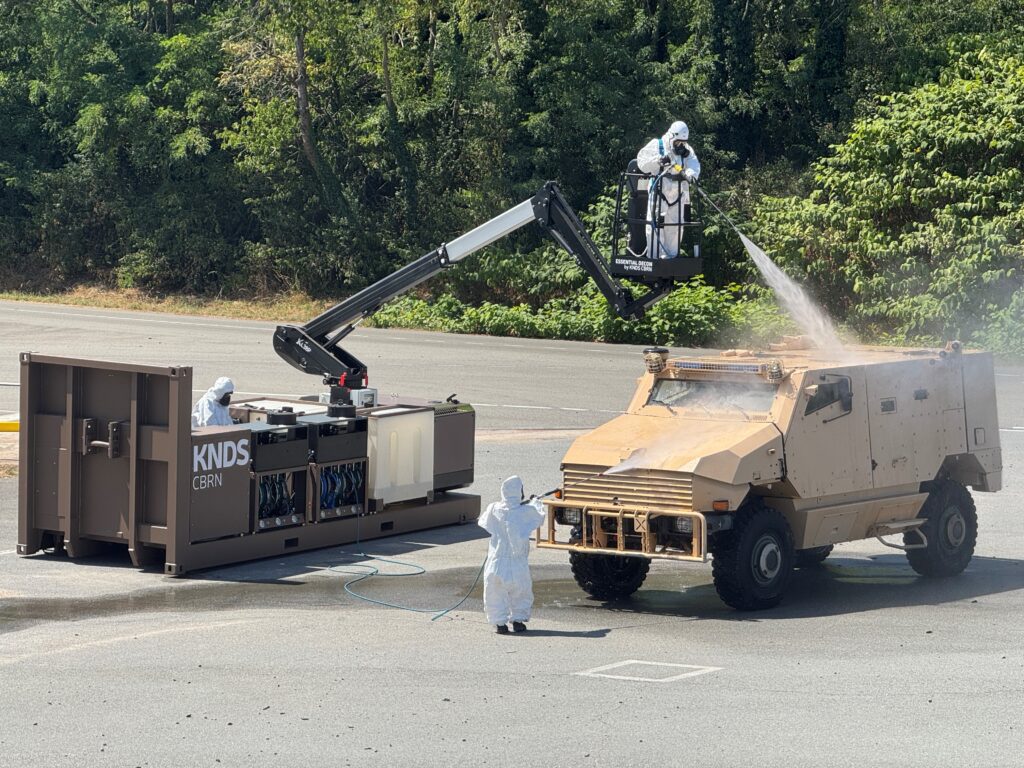
A key strength of the ESSENTIAL DECON L-01 lies in its versatility. The system is
compatible with a broad spectrum of decontamination agents, allowing it to effectively
neutralize everything from traditional chemical warfare agents to emerging biological
hazards. This adaptability ensures that operators can respond to any contaminant with
precision, whether in a tactical military operation or a civilian emergency response. The
system’s quick setup further enhances its operational value, making it an
indispensable tool in environments where every second counts.
Beyond its technical capabilities, the ESSENTIAL DECON L-01 plays a pivotal role in
comprehensive CBRN defense strategies. By enabling rapid and thorough
neutralization of contaminants, it not only restores operational readiness but
also minimizes the risk of secondary exposure, protecting both personnel and
equipment. In scenarios where multiple units or critical assets have been exposed, the
system’s efficiency ensures that mission-critical activities can resume without delay, a
capability that can make the difference between success and failure in high-stakes
operations.
Ultimately, the ESSENTIAL DECON L-01 is more than just a decontamination tool, it
is a powerful system, designed to integrate seamlessly into modern CBRN defense
frameworks. By combining mobility, adaptability, and rapid response, it empowers
operators to neutralize threats efficiently, ensuring that contamination never becomes
a limiting factor in mission execution.
Toward a Resilient CBRN Defense Ecosystem
The evolving CBRN threat landscape demands more than incremental improvements;
it requires a fundamental shift in how we approach protection and decontamination. As
threats grow more complex, from bioengineered pathogens to weaponized drones, the
need for adaptive, integrated solutions has never been more urgent. The future of
CBRN defense lies in systems that not only protect and neutralize but also anticipate
and adapt to emerging challenges.
A robust CBRN defense strategy must prioritize seamless integration between
protective equipment and rapid decontamination. Breathing protection systems must
offer uncompromised safety, communication, and clarity, ensuring that operators
remain effective in even the most hazardous environments. Meanwhile,
decontamination solutions must evolve to become faster, more versatile, and capable
of autonomous operation, reducing exposure risks and restoring operational readiness
without delay.
The key to success lies in innovation that bridges gaps, between traditional and
emerging threats, between military and civilian needs, and between human operators
and autonomous systems. By embracing smart materials and modular designs, we can
create a CBRN defense ecosystem that is not only responsive but also proactive,
capable of countering threats before they escalate.
In this new era, the goal is clear: equip those on the front lines with the tools they need
to face the unknown. Whether through advanced breathing protection or rapid
decontamination, the future of CBRN defense will be defined by our ability to innovate,
integrate, and adapt, ensuring that readiness is never compromised, no matter what
challenges lie ahead.