

CJTF Spartacus — Five Days of Multinational CBRNe Training at Monte Madonna, Pula
1–5 June 2026 | Monte Madonna, Pula, Croatia
By NCT Consultants
From 1 to 5 June 2026, NCT Consultants united twelve specialist teams from multiple countries at Monte Madonna, Pula, Croatia, for NCT PRO Challenge Europe 2026 — designated CJTF Spartacus. Operating from a former Austro-Hungarian coastal artillery fortress whose gun emplacements once guarded the entrance to Kvarner Bay, 61 military and law enforcement operators spent five days executing demanding multinational CBRNe, EOD, and Special Forces scenarios against a common threat picture rooted in today’s European security environment.
The exercise — the continent’s only dedicated live CBRNe training event of its kind — brought together EOD units from the United States Air Force and the Polish Army, CBRN specialists from Latvia, the Italian Navy, and two Croatian fire brigades, as well as Special Forces and law enforcement elements from Bulgaria and Slovakia. Organised under the Combined Joint Task Force (CJTF) Spartacus structure, participating teams were formed into three Joint Sub Task Forces (JSTFs): White, Blue, and Yellow, each integrating CBRN, EOD, and SOF/SWAT capabilities to mirror real operational structures.
The Threat Picture: The Volkov Pack
The exercise scenario was built around a credible, contemporary threat. The Volkov Pack — a fictitious state-aligned, deniable paramilitary organisation composed of former special operations personnel, foreign fighters, and technical specialists — was assessed to be operating within Southeast Europe under the direction of a Russian-backed proxy network. Intelligence confirmed that elements of the Volkov Pack had been rehearsing clandestine sabotage operations from covert sites in the region, with a capability set spanning IED manufacture, improvised chemical dissemination devices, radiological dispersal techniques, and UAV-enabled strike coordination. Potential targets included Western diplomatic facilities, energy infrastructure, transport nodes, and defence-related industries across the region.
This scenario framework — grounded in the realities of hybrid and grey-zone threats facing European security forces today — provided the operational context for all three mission packages executed across the training week.
Day 1 — Opening Address and Technology Training
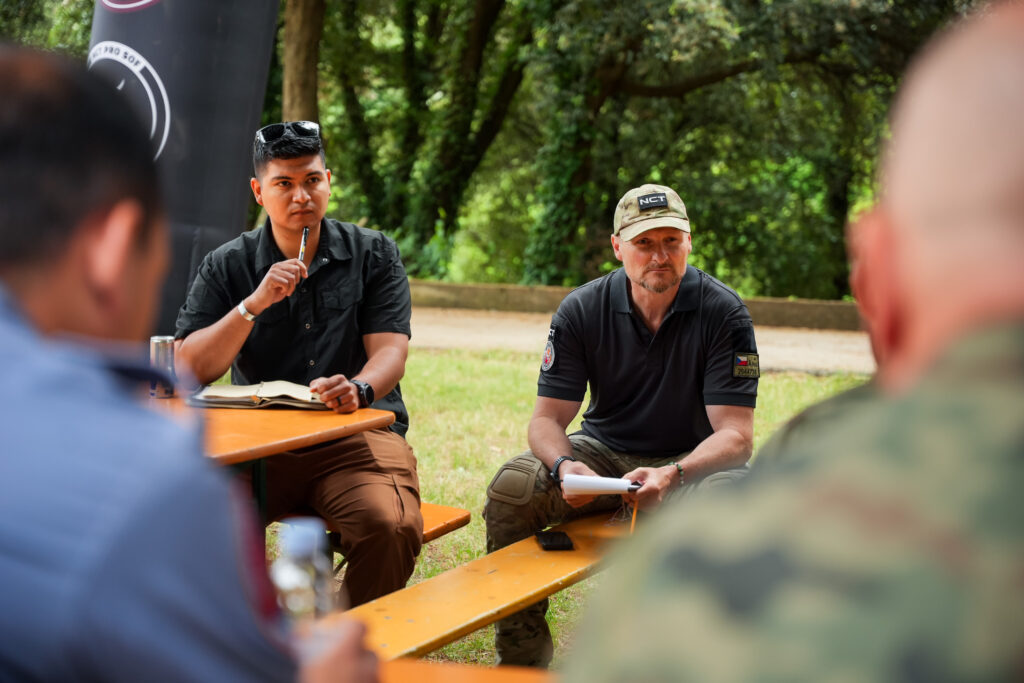
The week opened on Monday, 1 June, with an Opening Address followed by a full day of Technology Training at the Monte Madonna Briefing Area. All twelve teams rotated through sponsor stations, receiving hands-on familiarization with the equipment they would use in the field over the following three days. Eight technology partners presented their solutions directly to operators, including:
Airsense Analytics (GDA-P IMS chemical detector for CWA and TIC detection); Metrohm (Mira XTR DS handheld Raman spectrometer and Tactic ID 1064 ST for in-field identification of unknown substances); Heyl (SD-1 skin, clothing and surface decontamination spray effective against chemical and biological agents); SERB Pharmaceuticals (RSDL reactive skin decontaminant lotion for chemical decontamination); Kindeva (ComboPen Training Atropine Auto Injectors); Logos Imaging (XIRÓS II and STENÓS II portable X-ray imaging systems for IED/EOD exploitation); North American Rescue (NAR-Decon kits, moulage, and IFAK kits for Tactical Combat Casualty Care); and AREX (TDS 9mm and 5.56mm MTX Marker Training Ammunition for live-fire integration).
The day concluded with Battle Preparation and a Commanders’ O Group, setting conditions for the three-day exercise phase to follow. The Tactical Operations Centre (TOC), commanded by BG (Ret.) William King and collocated with a Fusion Center providing real-time drone and camera feeds, was established and operational by the end of the day.
Days 2–4 — JSTF Exercise: Dark Passage, Silent Dispatch, Silent Hawk
Tuesday through Thursday followed a consistent operational rhythm: field missions from 08:00 to 14:00, lunch, a JSTF/Instructor After Action Review (AAR), and a Commanders O Group at 16:30. Each JSTF executed all three mission packages across the three days in rotation, ensuring every team confronted each scenario with fresh eyes.
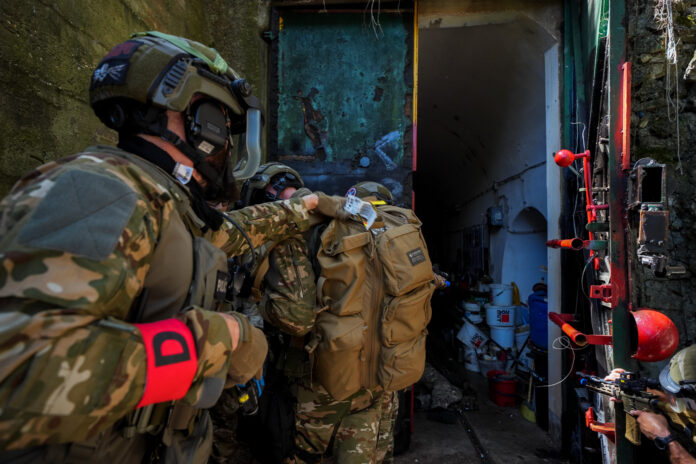
Dark Passage. — Teams were tasked with clearing an underground tunnel system in the Monte Madonna cliffside, within which a Volkov Pack cell was assessed to be manufacturing a chemical-payload IED. The confined space, limited egress, and risk of chemical exposure placed extreme demands on CBRN-EOD integration. Teams were required to clear the tunnels, secure precursor materials, and exploit the site for intelligence — all while managing the threat of contamination in a low-visibility environment.
Silent Dispatch. — Intelligence identified an abandoned building at Monte Madonna being used by Volkov Pack operatives as a logistics and distribution hub, with a suspected white rental van linked to multiple visits in the preceding 48 hours. Teams were tasked to enter, secure, search, and neutralise threats while preventing contamination spread. The scenario tested CBRN-aware building clearance and evidence exploitation under time pressure.
Silent Hawk. — The highest-complexity scenario of the week placed teams in a VIP protection role at an open-air high-profile meeting between Croatian and Slovenian military leaders at Monte Madonna. Intelligence indicated the Volkov Pack was planning a UAV-enabled chemical attack. Teams were required to establish a protection perimeter, maintain chemical detection coverage, and respond immediately to any UAV or CBRN incident — integrating counter-drone awareness with CBRN consequence management in a live-fire-capable environment. AREX marker ammunition was used across tactical elements throughout the exercise.
The instructor cadre — led by George McKerrow and comprising seven experienced professionals — covered both disciplines throughout: EOD instruction was provided by Anto, Josip, MSgt Manuel Carvajal, , and SMSgt Chris Mueller; CBRN instruction by Lt. Radim Klacl and Lt Pavel Brabec.
Participating Teams
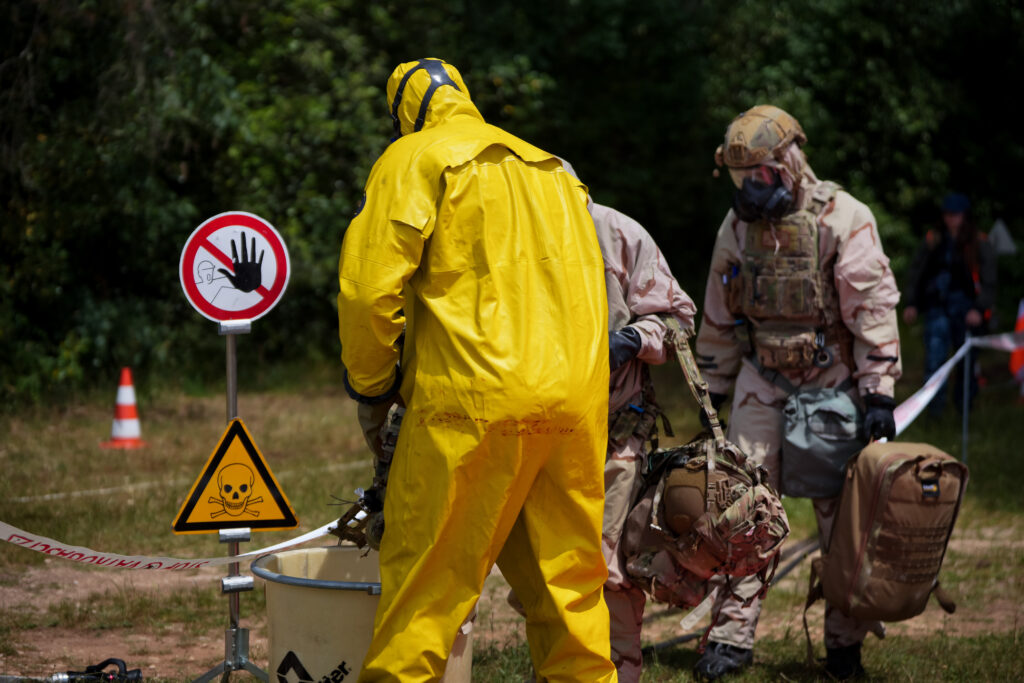
The twelve teams that formed CJTF Spartacus brought a total of 61 operators and specialists, spanning seven nationalities across military, law enforcement, and civil protection structures:
JSTF White (19 operators): Bulgarian Special Operations and Counter Terrorism Unit — SOBT (A); Polish Army 1st Combat Engineer Regiment; USAF 45th Civil Engineer Squadron EOD; Croatian Fire Service Rijeka.
JSTF Yellow (21 operators): Slovak Police Unit LYNX Commando; Latvian National Guard CBRN Unit; Italian Navy/Marines EODCBRN; USAF 434th Civil Engineer Squadron EOD.
JSTF Blue (21 operators): Bulgarian SOBT (B); Polish Military Police Special Unit; Croatian JANAF Fire Brigade; Latvian National Armed Forces Special Operations Forces CBRN; USAF 436th Civil Engineer Squadron EOD.
The Venue: Monte Madonna
Monte Madonna — a former military fortification on the Istrian peninsula south of Pula — provided a uniquely authentic training environment. Originally constructed from 1915 as part of the Pula coastal defence system, the site housed 310mm naval gun batteries designed to guard the Kvarner Bay sea lanes. Used successively by Austro-Hungarian, Italian, German, Yugoslav, and Croatian armed forces over the following century, the site’s tunnel systems, bunkers, and varied terrain provided the ideal physical backdrop for all three OPORD scenarios — from confined-space underground operations to open-air VIP protection.
Day 5 — After Action Reviews and Certificate Ceremony
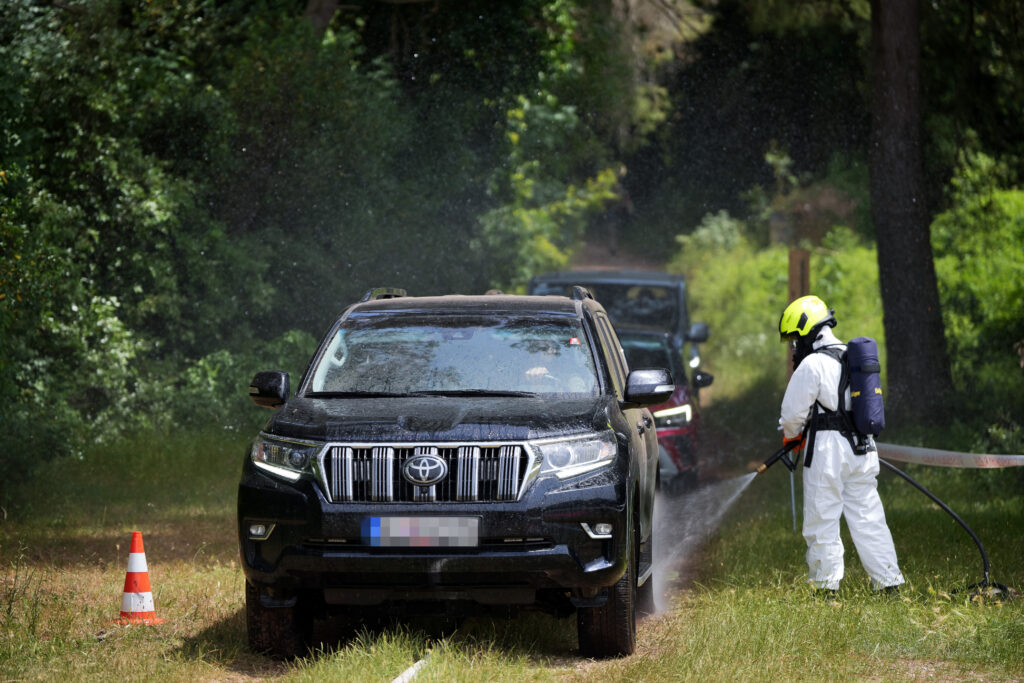
Friday, 5 June, was dedicated to structured review and closure. JSTF AARs ran from 08:00 to 10:00, followed by the Commanders’ AAR from 10:00 to 12:00, during which instructors and team commanders consolidated lessons learned across all three JSTFs and all three mission packages. The Certificate Ceremony took place at 12:00, with all participating operators receiving their NCT PRO Training certificates.
Looking Ahead
NCT PRO Challenge Europe returns in 2027. Planning is underway. For teams and technology partners interested in participating, further information is available through NCT Consultants at nct-events.com.