

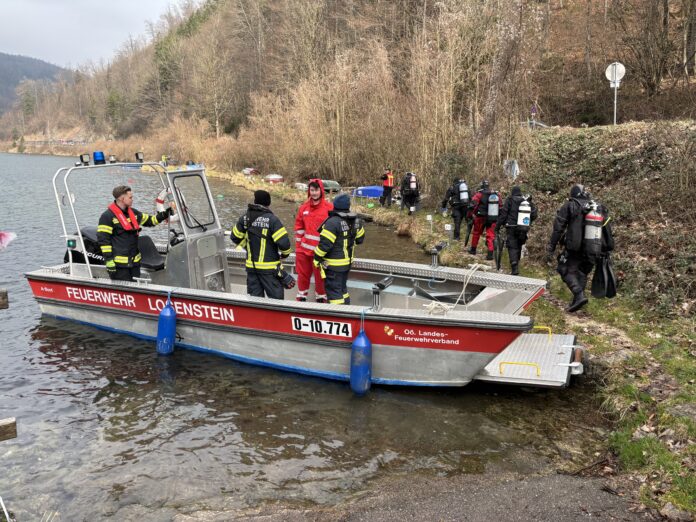
By CROSSFLOOD Team Austria
As preparations intensify for the Union Civil Protection Mechanism (UCPM) CROSSFLOOD Full Scale Exercise in Romania in September–October 2026, each participating team takes the spotlight to present their unit ahead of deployment. This new articles series offers readers an exclusive preview of the expertise, equipment, and operational capabilities that will come together during the exercise. More team profiles will be published on the NCT CBNW website over the next months.
1. Team History & Structure: A New Approach to Interoperability
The Genesis of the Module from Team Austria represents a strategic evolution in the Austrian Firefighting Association’s approach to international disaster relief. While various Austrian federal regions have successfully established their own international disaster relief modules using local personnel and equipment, Team Austria introduces a new operational paradigm. For the first time, this module functions as a fully integrated “mixed unit,” synthesizing resources and capabilities from participating regions across the nation to form a unified federal response.
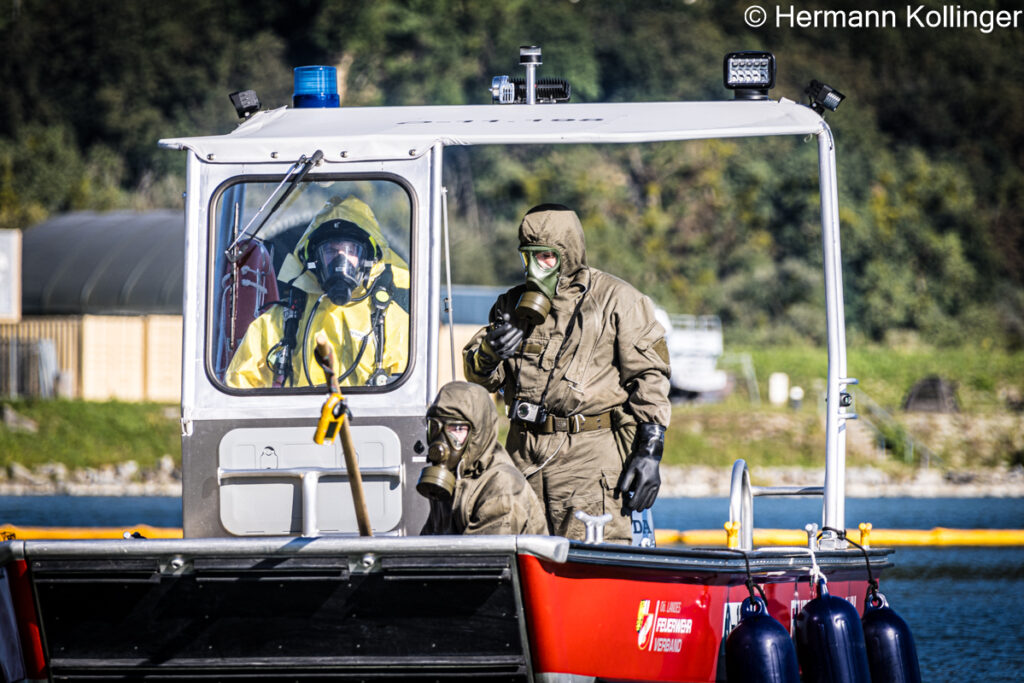
Proof of Concept: The Salzburg Exercises
The foundation for this cooperation was laid during two major forest fire exercises held in Salzburg in 2024 and 2025. These preliminary exercises served as the “case studies” for the module, proving that mixing personnel and equipment from different regional units enhances operational capacity rather than hindering it. These successful deployments paved the way for the team’s participation in international operations.
Organizational Structure: For the CROSSFLOOD exercise, Team Austria deploys a “Mission Tailored Element” from 4 regions (Salzburg, Upper Austria, Lower Austria and Styria) totaling approximately 45 personnel (PAX). The structure is designed for autonomy and clear chains of command, divided into three distinct pillars:
- Command and Control (C2): A specialized team of 9 PAX responsible for the overall strategic direction, coordination with local authorities, and safety of the mission. They operate out of specialized command vehicles equipped to serve as mobile headquarters.
- Operation Element: The core work force consisting of 20 PAX. This element is responsible for the direct execution of rescue and technical tasks, specifically utilizing the fleet of rescue boats.
- Logistic Element: A vital support unit of 16 PAX ensures the team remains operational and self-sufficient throughout the deployment.
2. Capabilities & Equipment:
Team Austria enters the CROSSFLOOD operational area with robust heavy-equipment, including 10 vehicles, 6 trailers, and a specialized fleet of 5 boats. The equipment is selected to address a wide spectrum of water-based emergencies, from technical work to rapid evacuation.
The Boat Fleet: The primary capability of Team Austria in this exercise is supporting with boats. The fleet includes three distinct vessel types, each chosen for specific hydrological environments:
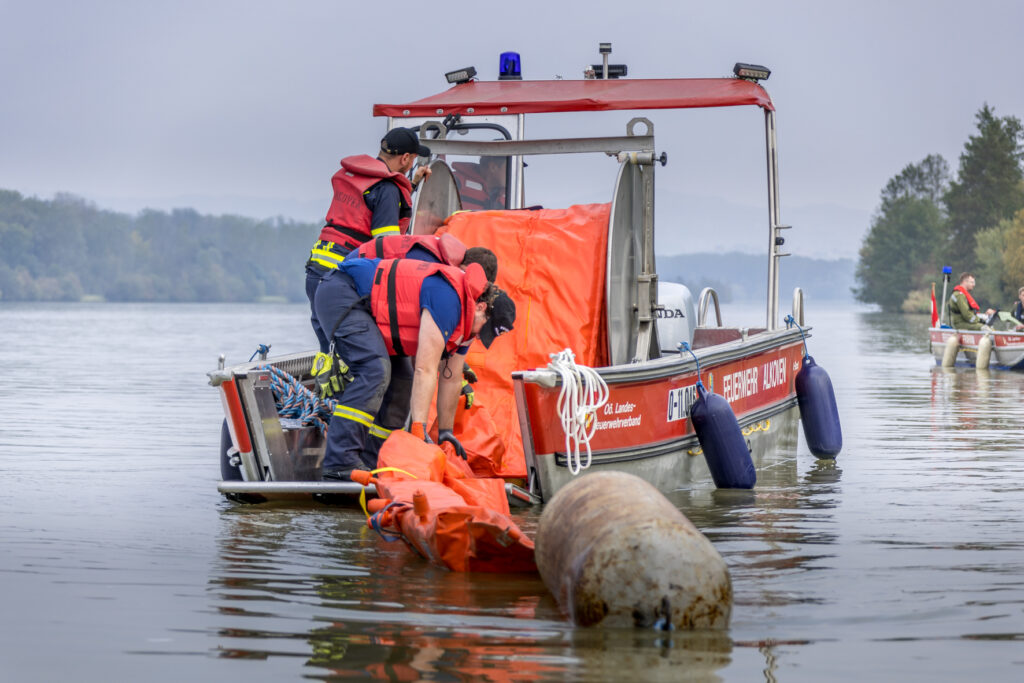
- Heavy Work and Rescue Boat (A-Boot): This serves as the “workhorse” of the operation. Constructed from seawater-resistant aluminum, this 6-meter vessel is powered by a 135 hp engine. It is designed with a flat hull, which ensures exceptional stability in shallow waters and during high tide flood scenarios.
- Capabilities: With a payload of approximately 1,000 kg and capacity for 10 people, it is utilized for transporting heavy materials, evacuating large groups (people and animals), and conducting technical operations such as oil spill containment. Its design allows it to navigate stagnant and flowing waters, as well as difficult floodplains.
- Medium Rescue Boat (Whaly 500 R PRO): For more dynamic environments, the team deploys the Whaly 500 R PRO. This 4.99-meter boat is constructed from a weld-free polyethylene (PE) hollow body.
- Capabilities: The PE construction makes the hull incredibly robust and impact-resistant, which is critical when navigating floodwaters filled with floating debris. Powered by a 60 hp engine and capable of speeds up to 60 km/h, it is designed for choppy water conditions and rapid, safe evacuation of up to 10 people.
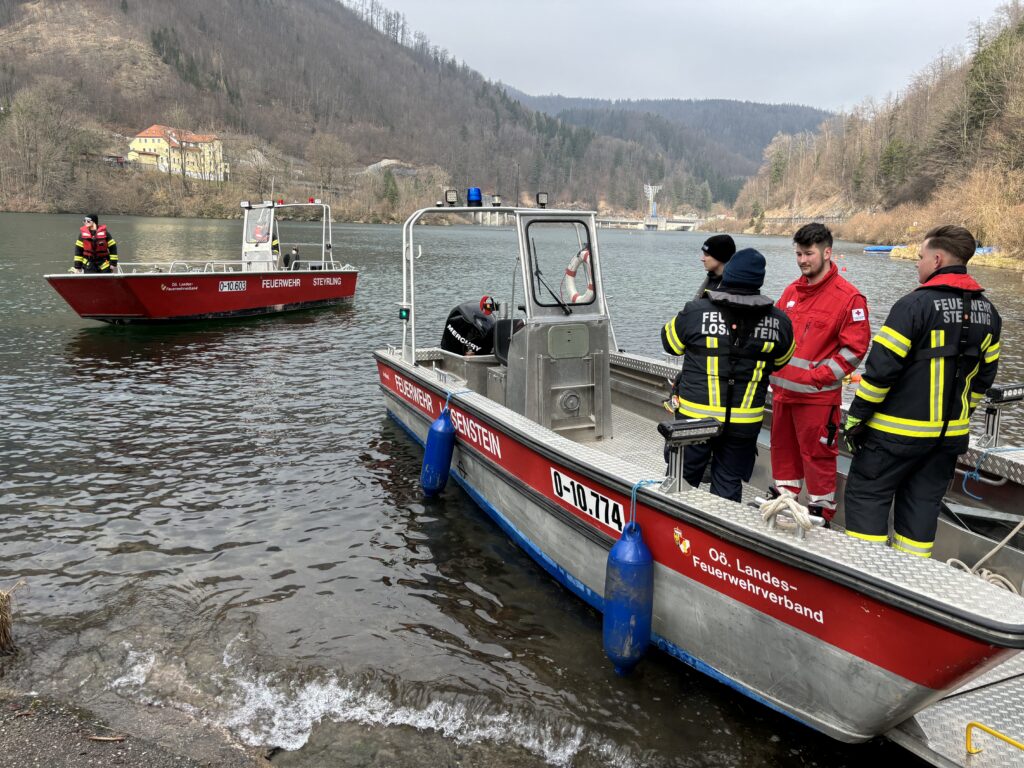
- Light Rescue Boat (FRB): Completing the fleet is the aluminum Light Rescue Boat. At 6.2 meters long with a 40 hp engine, this vessel is optimized for speed and agility.
- Capabilities: With a payload of 400 kg and capacity for 8 people, it is specifically designed for rapid rescue tasks and safety measures in both flowing and stagnant waters.
The boat fleet is supported by a fleet of logistical vehicles, including heavy trucks with crane capabilities for launching and recovering vessels, and transport buses for personnel.
3. Operational Strategies: Autonomy and Self-Sufficiency
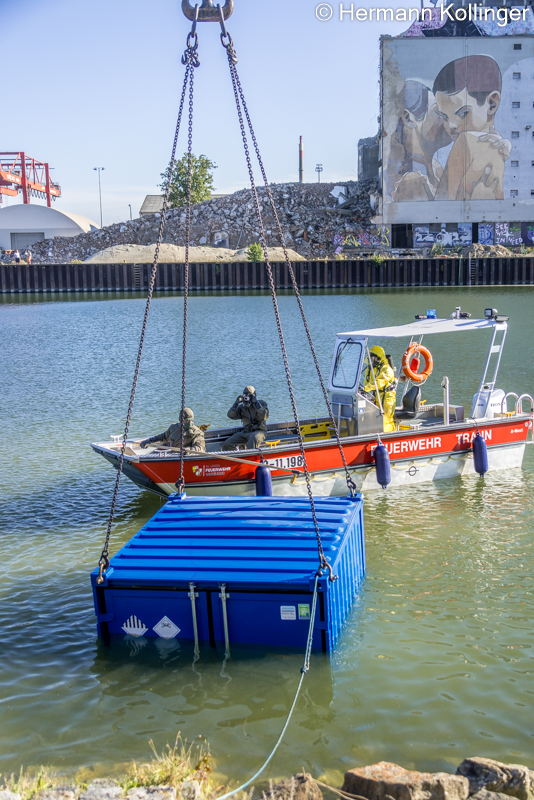
A cornerstone of Team Austria’s operational philosophy is Self-Sufficiency. In disaster zones where local infrastructure may be compromised, the team is designed to operate without drawing on the strained resources of the affected nation.
The Logistic Element utilizes a containerized support system that ensures the team can function independently:
The team deploys a specialized sanitary container divided into two lockable areas. It includes toilets, hot/cold washbasins, shower cubicles, and a 200-liter hot water tank. A field kitchen container and a refrigeration container ensure that the team is well fed and can cope with energy-intensive operations.
Deployment Strategy: The operational strategy involves a rigorous planning phase followed by a complex deployment execution. For CROSSFLOOD, this includes a land march of over 1,200 km to the area of operation. The team utilizes “Reach Back capacity,” maintaining a link to the home base for additional support or intelligence if required.
Training and preparation focus heavily on the testing of Standard Operating Procedures (SOPs) to ensure the mixed-unit personnel operate seamlessly as a single entity. The team’s operations are aligned with the European Union Civil Protection (EUCP) mechanism standards, ensuring interoperability with other international teams.
4. Role in CROSSFLOOD: Supporting the Affected Country
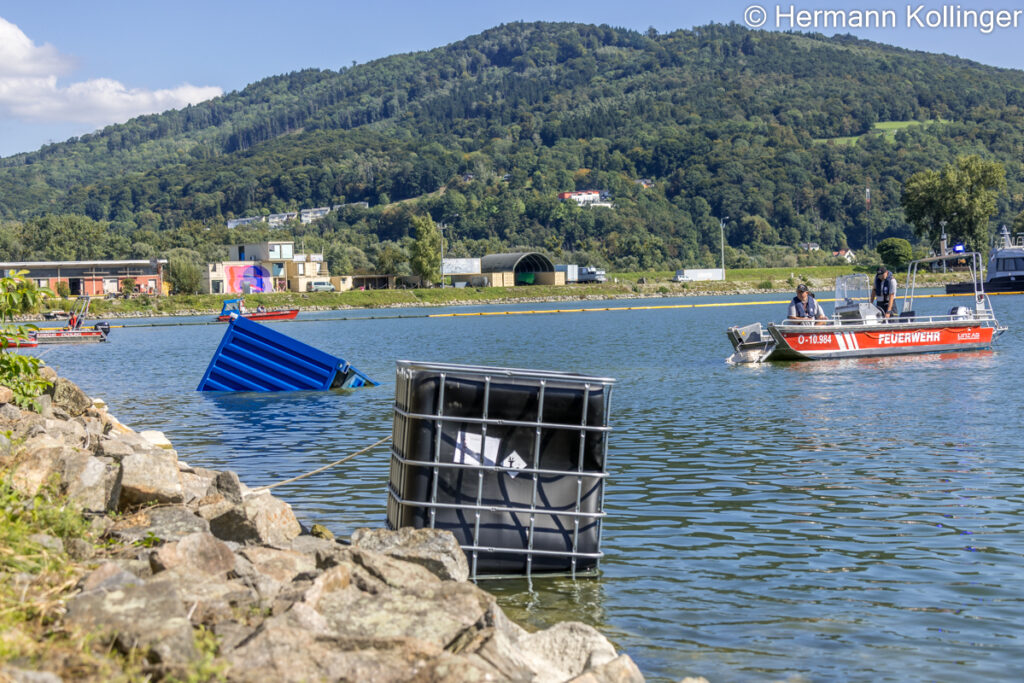
In the CROSSFLOOD scenario, Team Austria’s primary objective is to support the affected country—specifically Romania —using their specialized boating capabilities.
The exercise area is located near Siret, Romania. Here, Team Austria will demonstrate its ability to integrate into an international command structure. The mission profile extends beyond operational duties, requiring the team to also independently establish and maintain a Base of Operations (BoO) that meets international standards.
Specific Mission Objectives:
- Water Rescue and Transport: Utilizing the fleet to evacuate civilians from flooded areas using the high-stability A-Boats and impact-resistant Whaly boats.
- Technical Assistance: Supporting hazardous goods operations and oil spill containment, utilizing the heavy payload capacity of the workboats.
- Interoperability: The exercise serves as a proving ground for the “mixed unit” concept, demonstrating how different regional Austrian capabilities can be fused into a single, cohesive international relief module.
By combining rigorous training, high-specification equipment, and a novel organizational structure, Team Austria stands ready to provide effective, self-sufficient aid during the CROSSFLOOD exercise and beyond.