


By Kevin Cresswell
Here is the reassuring truth: North America knows how to police major events.
Professional sports. Music festivals. Political conventions. Natural disasters. Civil disorder.
And here is the uncomfortable reality: the FIFA World Cup does not care.
It does not respect jurisdictional boundaries, shift patterns, command charts, or the comforting belief that “we’ve handled big events before.” What it introduces instead is a fundamentally different operating environment—defined by continental scale, prolonged duration, emotional volatility, alcohol, international rivalries, real-time global scrutiny, and adversaries who view celebration as opportunity.
My role as Chair of the International Association of Chiefs of Police (IACP) Sub-Committee for the FIFA World Cup 2026 is not to alarm host cities or undermine confidence. It is to ensure that the surprises we encounter are the manageable kind—not the ones that place a city’s name beneath a breaking-news banner.
If we succeed, 2026 will be remembered for extraordinary football.
If we fail, it becomes a case study.
Naturally, we are aiming for the first outcome.
A Mega-Event Without Precedent
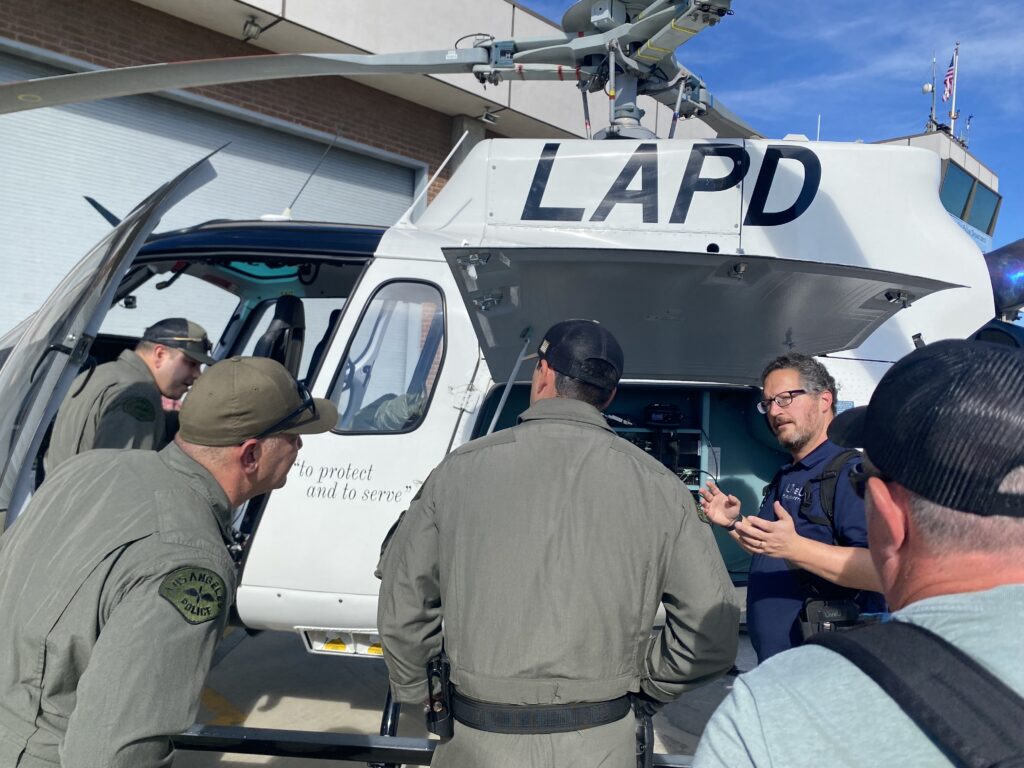
The FIFA World Cup 2026™ will draw millions of spectators across North America, while placing Mexico—and the wider region—at the center of global attention approaching six billion viewers. Mega-events are, by definition, unpredictable. This one is unprecedented in geography, dispersion, and persistence.
Matches will unfold simultaneously across cities, stadiums, fan zones, hotels, entertainment districts, and national transportation networks. For public safety agencies, this represents continuous, multi-site exposure, not episodic surge operations.
As I recently briefed to local, state, and federal responder agencies:
“Preparedness is deterrence. Coordination is resilience.”
Nowhere will that axiom be tested more rigorously than during FIFA World Cup 2026.
Crowds, Cues, and the Weaponization of Visibility
U.S. policing doctrine appropriately balances officer safety against escalation risk. International football crowds, however, operate under different assumptions. Many fans are unfamiliar with U.S. police commands, arrest thresholds, force options, or tactical posture.
They bring their own policing cues—shaped by experiences in Europe, South America, Africa, and the Middle East. Perception drives behavior, and behavior drives outcomes.
Visibility matters. Tone matters. Predictability matters.
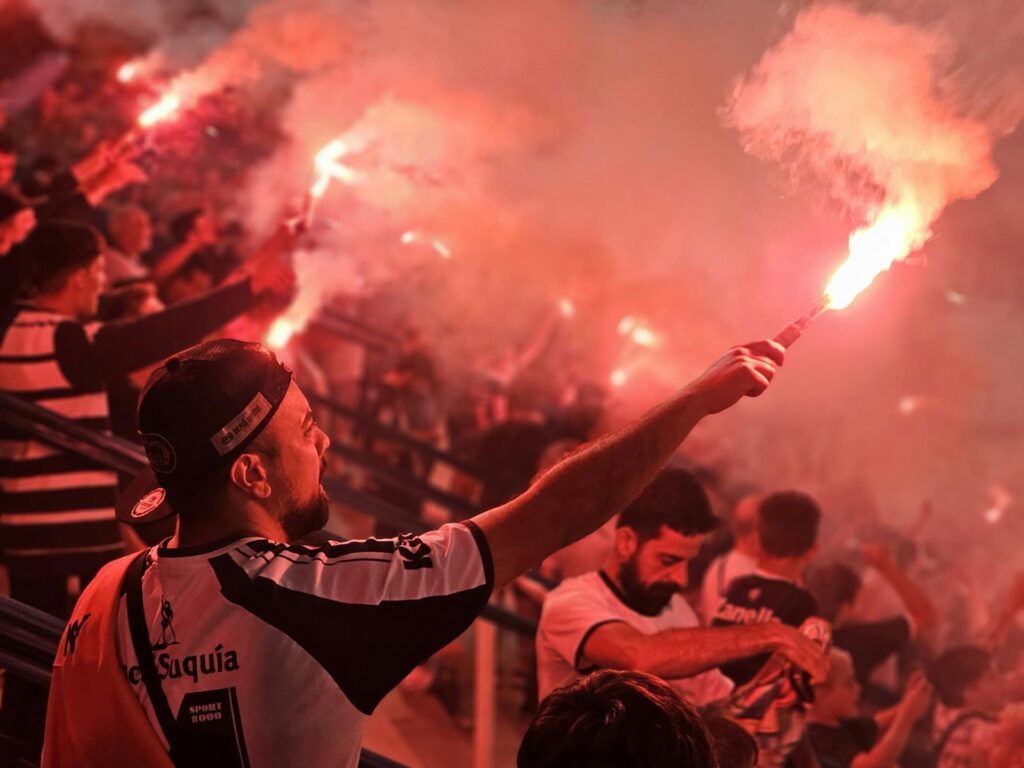
Football hooliganism, while not ordinarily linked to terrorist organizations, can provide the distraction, density, and disorder a terrorist requires. Crowds can be exploited unknowingly—through manipulated protests, pitch invasions, or even contaminated pyrotechnics and flares sold as novelty items.
History reinforces the risk. Terrorist attacks and disrupted plots near sporting events are neither rare nor hypothetical:
- 2015 – Stade de France: Suicide bombings during France v Germany
- 2016 – Kosovo: ISIS plot against Israel’s national team thwarted
- 2017 – Kabul: Suicide blast near Kabul Stadium
- 2018 – Jalalabad: Explosions at cricket match
- 2023 – Brussels: Terrorist attack near international football match
- 2024 – Paris: Foiled ISIS-inspired plot targeting Olympic football infrastructure
Extremist movements are increasingly transnational, with racially or ethnically motivated violent extremists (RMVE) and anti-government, anti-authority violent extremists (AGAAVE) seeking cross-border engagement. U.S. authorities are actively monitoring hundreds of individuals of concern.
Layered onto this is organized crime. Mexican cartels have historically leveraged football for money laundering, corruption, and social legitimacy—and increasingly adopt terror-style tactics. With Mexico co-hosting the tournament, the convergence of cartel territorial influence, global spectatorship, and symbolic opportunity cannot be ignored.
Nor can the insider threat: temporary staff, contractors, security vendors, and technical personnel with access and opportunity.
Outside stadiums—where alcohol consumption rises, command authority diffuses, and social media amplifies every interaction—misunderstanding becomes risk. Not only to fans, but to officers. Every decision now carries reputational consequence, transmitted globally in real time.
Soft Targets, Hard Consequences
Stadiums will be among the most hardened environments on the continent. The risk, however, migrates outward.
Fan zones. Transit hubs. Hotel clusters. Public viewing areas. Entertainment districts.
These are soft not only to crowd disorder, but to hybrid attack methodologies, including:
- Vehicle ramming
- Insider facilitation
- Cyber disruption
- Uncrewed Aerial Systems (UAS)
- Lone-actor or network-enabled terrorism
- State-sponsored or inspired attacks
—including CBRNE-enabled tactics
Coordinated or sequential attacks designed to stretch response capacity and exploit jurisdictional seams represent one of the most complex threat environments U.S. public safety has faced on home soil.
The strategic intent is rarely limited to casualties alone. It is about psychological impact—eroding confidence, disrupting a global spectacle, and forcing authorities into reactive postures under unprecedented scrutiny.
The Drone Problem: When the Fence Line Becomes Irrelevant
For decades, event security planning began—and often ended—at the perimeter. Hard fences. Credentialed access. Controlled vehicle routes.
That model is now obsolete.
Uncrewed Aerial Systems require no ticket, no gate, and no traffic congestion. At World Cup scale, airspace becomes the new perimeter—low cost, highly accessible, and disproportionately impactful.
Modern drones can operate autonomously, in GPS-denied or RF-congested environments. Payloads may be small, but effects are not:
- Small IEDs
- Chemical or biological irritants
- Smoke or flash devices
- Hoax payloads designed to induce panic
Any of these can halt play, force evacuations, and dominate global media within minutes. The threat is no longer theoretical.
Transnational Convergence and the Untried Vector
Intelligence from Europe and the Middle East indicates extremist and criminal networks in Mexico may be sharing techniques for chemical or biological payload delivery, including drone-enabled methods.
Transnational actors—from Iran-linked chemical and biological research entities experimenting with enhanced irritants, to Hezbollah-associated networks operating in South America—maintain documented links with criminal organizations, amplifying local risk.
Terrorist organizations learn from one another. They emulate success. They refine failure.
What is notable—and concerning—is that CBRNE attacks at events of this visibility remain largely untested. That absence should not reassure planners; it should focus them. Novelty itself has strategic value to adversaries seeking disruption and attention.
The CBRN Threat Picture: Situational, Not Speculative
For FIFA World Cup 2026 planners, the CBRN threat is not abstract—it is situational:
- Chemical:
Low-tech dissemination of toxic industrial chemicals or irritants in open-air fan zones, transit corridors, or HVAC-adjacent spaces—often aimed at panic rather than lethality. - Biological:
Low probability, but high psychological, reputational, and economic impact through aerosolized or surface-borne contamination. - Radiological:
Dispersion of small sources in public gathering areas or near iconic locations—disruptive even without casualties. - Nuclear:
Extremely low probability, but deterrence requires fully integrated radiation detection and intelligence fusion across host cities. - Explosive Hybridization:
The most probable vector—particularly when combined with chemical agents or delivered via UAS.
As Samantha Sonnett, retired NYPD CBRNe specialist from the COBRA Unit, notes:
“First responders face real-time agent identification challenges, PPE shortages, and gaps in appropriate CBRNe training. These agents may be the primary attack—or a force multiplier—adding layered complexity and increasing the psychological impact of an incident.”
Federal Support, Local Reality
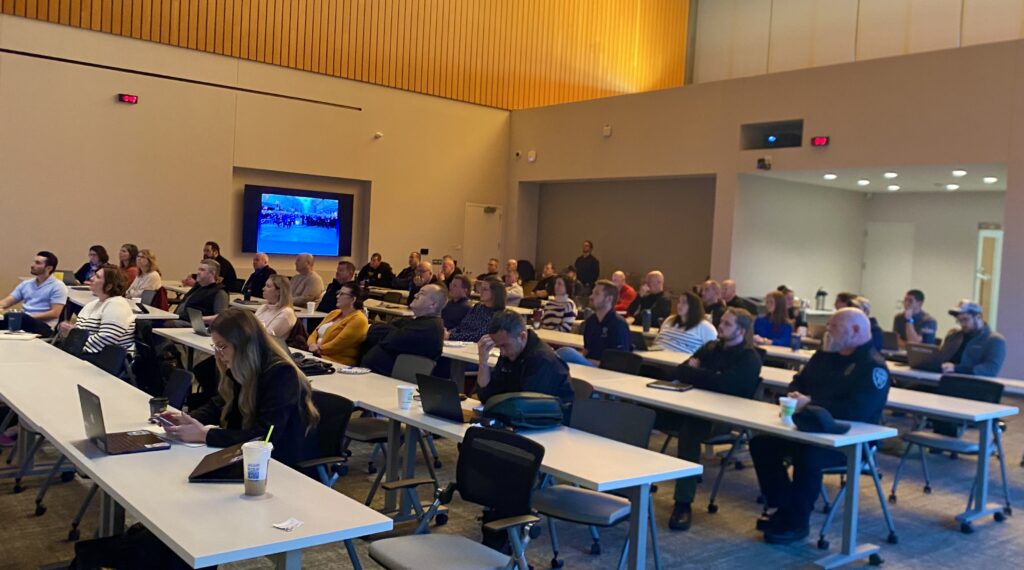
The FIFA World Cup Grant Program (FWCGP), following DHS designation of all U.S. matches as SEAR I and II events, acknowledges the scale of the challenge. Agencies can now seek support for detection, training, and response.
But equipment alone does not equal readiness.
What matters is integration:
- Intelligence sharing across borders and agencies
- Joint operational planning
- Real-time information fusion
- Clear decision-making authority under pressure
Conclusion: The CBRNE Imperative
FIFA World Cup 2026 is not merely a sporting event. It is a global political, cultural, and media moment—one that compresses risk, attention, and consequence into a single operational environment.
For CBRNE professionals, the challenge is stark. A chemical, biological, radiological, or hybrid incident—whether lethal or not—would have effects far beyond the immediate scene. Panic spreads faster than agents. Perception outpaces pathology. Reputation damage can exceed physical harm.
Success will not be measured solely by interdiction. It will be measured by speed of detection, clarity of attribution, confidence of response, and credibility of communication.
Preparedness must therefore be layered:
- Detection that works outside the stadium
- Response models that assume ambiguity
- Training that anticipates agent uncertainty
- Public messaging that stabilizes behavior, not inflames it
The objective is not zero risk—that is unattainable.
The objective is risk that never outruns readiness.
Preparedness is deterrence.
Coordination is resilience.
In the CBRNE domain, credibility is security.
Kevin Cresswell is the founder of CBRNE & CT Atlantic Bridge and a global security and defense professional with more than 40 years of international experience across law enforcement, military operations, intelligence, investigations, training, and business development. He serves on the International Association of Chiefs of Police Patrol & Tactical Officers Committee as Public Order Advisor and Chair of the FIFA World Cup 2026 Sub-Committee, contributing to one of the most complex multi-agency security operations ever undertaken.